


Smart lighting should be instant and reliable, yet traditional smart bulbs often frustrate homeowners with sluggish app responses, dropped connections, and proprietary bridge clutter.
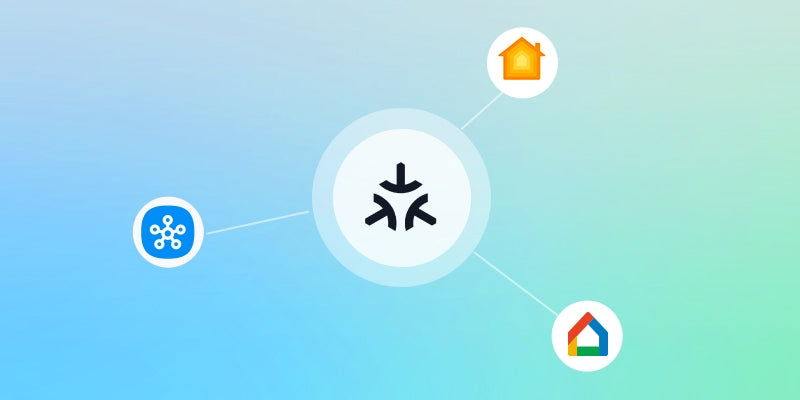
Matter over Thread light bulbs represent the gold standard of modern connected lighting. By pairing the robust, low-power mesh networking of Thread with the universal cross-platform language of Matter, these bulbs provide lightning-fast local control across Apple Home, Google Home, Amazon Alexa, and Samsung SmartThings.

This comprehensive guide breaks down how Matter over Thread light bulbs work, explains the hardware requirements you must know before buying, and details the best lighting options for every room in your home.
How Matter over Thread Light Bulbs Work
Matter over Thread light bulbs are smart lighting fixtures that combine two distinct, modern smart home technologies into a single device: Thread handles the physical wireless connection between devices, while Matter manages the software commands that your smart home platforms send.
How Matter and Thread Interact
To understand these bulbs, think of Thread as the private roadway and Matter as the vehicle operating on it:
Thread operates at the network layer: It is an IPv6-based, low-power wireless mesh protocol running on IEEE 802.15.4 frequencies. Thread bulbs never connect directly to your household Wi-Fi router. Instead, each powered bulb acts as a mesh node that routes data packets across your home.
Matter operates at the application layer: It is a universal language developed by the Connectivity Standards Alliance (CSA). Matter ensures that a command sent from an iPhone, an Android tablet, or an Echo smart speaker speaks the exact same digital dialect to adjust brightness or change color.

Core Advantages of Matter over Thread Lighting
Combining these two technologies delivers immediate real-world benefits for residential spaces:
- Sub-Second Response Latency: Thread eliminates the cloud relay lag typical of older Wi-Fi or Bluetooth lighting. Commands execute locally in milliseconds.
- Self-Healing Whole-Home Reliability: In typical 2,500-square-foot multi-story homes, single Wi-Fi access points leave dead spots. Because powered Thread bulbs relay signals to one another, removing or turning off one bulb simply prompts the network to reroute signals around it automatically.
- Zero Wi-Fi Congestion: Because Thread runs on dedicated low-frequency wireless channels, installing dozens of smart bulbs will never slow down your home Wi-Fi speeds during 4K streaming or video calls.
- Local Offline Control: If your internet service provider experiences an outage, your interior schedules, wireless wall switches, and room motion automations continue to trigger without interruption.
Do You Need a Border Router?
You cannot connect Matter over Thread light bulbs directly to a standard Wi-Fi router alone. You must own at least one active Thread border router on your home network to bridge Thread signals to your local Wi-Fi and Ethernet lines.
Common household devices that double as Thread border routers include:
- Apple: Apple HomePod (2nd Gen), HomePod mini, and Apple TV 4K (Wi-Fi + Ethernet models).
- Google: Nest Hub (2nd Gen), Nest Hub Max, and Nest Wifi Pro.
- Amazon: Echo (4th Gen) and select eero 6/Pro mesh routers.
- SmartThings: SmartThings Station and SmartThings Hub v3.
If you do not currently own one of these hubs, you must factor that additional purchase into your budget before choosing Thread bulbs.
Thread vs. Matter: What’s the Difference for Smart Lighting?
Thread is the wireless highway, while Matter is the language spoken by the cars driving on it.
You never have to choose between Thread and Matter as opposing standards. Instead, they work at different levels of your smart home infrastructure:
How Matter Creates a Unified Smart Home Ecosystem
Matter standardizes smart lighting control through three straightforward principles:
- Platform Agnosticism: Eliminates brand lock-in, letting you manage mixed hardware easily through Apple Home, Google Home, or Amazon Alexa.
- Standardized Controls: Establishes universal device commands, guaranteeing consistent dimming and color performance across all certified brands.
- Multi-Admin Sharing: Enables simultaneous control from multiple platforms, so iOS and Android family members can control the same lights without permission conflicts.
Can Matter Work Without Thread?
Yes. Matter is transmission-agnostic. While some smart bulbs use Matter over Thread, other fixtures use Matter over Wi-Fi—such as the high-lumen Linkind Matter bulb series.
Matter over Wi-Fi bulbs offer identical platform-agnostic control and local offline execution, but they connect directly to your 2.4GHz home Wi-Fi network without requiring an expensive Thread border router.

Quick Comparison: Thread Mesh vs. Matter Protocol
| Dimension | Thread (Network Protocol) | Matter (Application Standard) |
|---|---|---|
| System Layer | Networking / Transport Layer | Application Layer (Software Language) |
| Primary Job | Builds a fast, low-power mesh network | Ensures cross-platform compatibility |
| Connection Radio | IEEE 802.15.4 wireless radio | Operates over Thread, Wi-Fi, or Ethernet |
| Hardware Needed | Requires a Thread Border Router | Runs on standard ecosystem hubs |
| Direct Rivals | Zigbee, Z-Wave, Bluetooth LE | Closed manufacturer apps |
| Lighting Benefit | Ultra-low latency, zero Wi-Fi load | Unified multi-admin sharing, offline security |
Key Takeaway: Thread delivers reliable signal propagation, while Matter ensures multi-platform voice and app control. They work together seamlessly to build a responsive, bridge-free smart home.
Knowledge Base:
Matter vs Zigbee: What's The Difference
Top Matter and Thread Smart Bulb Options for US Homes
When outfitting an American home with next-generation smart lighting, you can adopt two practical paths under the Matter standard: Matter over Thread for low-bandwidth mesh clusters (requiring a border router), and Matter over Wi-Fi for instant, hub-free setup, higher lumen output, and diverse architectural fixture types.

1. Linkind Matter Smart RGBTW Light Bulb A19
A high-lumen, plug-and-play staple built for standard table lamps, reading lights, and covered front porch sconces.
- Hub-Free Setup: Connects directly via 2.4GHz Wi-Fi with Bluetooth pairing to standard 120V E26 sockets without an expensive border router.
- Superior 1100-Lumen Brightness: Significantly outshines typical 800-lumen Thread bulbs to easily illuminate large living rooms and open hallways.
- Rapid Power Recovery: Automatically reconnects within five seconds after wall-switch toggles or sudden power flickers.
- Local Matter Automation: Executes schedules and lighting routines locally inside your home network for zero-lag response.
2. Nanoleaf Essentials Smart Bulb A19 (Matter over Thread)
A reliable option for low-latency mesh lighting in households that already maintain an active Thread border router.
- Low-Latency Mesh: Communicates over an IEEE 802.15.4 mesh network for rapid signal hops between neighboring nodes.
- Zero Wi-Fi Congestion: Operates outside standard Wi-Fi channels, preserving home router IP assignments.
- Native Ecosystem Pairing: Connects directly into Apple Home, Google Home, or SmartThings using Matter QR setup.
3. Linkind Matter Smart Light Bulbs BR30
Tailor-made for 5-inch and 6-inch recessed ceiling housings common in American kitchens, living rooms, and finished basements.
- Engineered for Pot Lights: Wide flood beam angle disperses light evenly across the ceiling without creating tunnel glare or harsh shadows.
- Full Tunable White & Color: Smooth color temperature transition from 1800K warm glow to 6500K daylight plus 16 million colors.
- Flicker-Free Smooth Dimming: Designed for standard US 120V circuits with steady 1% to 100% dimming performance.
- Cross-Family Multi-Admin: Allows iOS and Android family members to control shared living area downlights simultaneously.
4. Linkind Smart Filament Bulb B11
Engineered with an E12 candelabra base to modernize classic multi-socket fixtures without bulky socket adapters.
- Standard E12 Candelabra Base: Fits directly into traditional dining room chandeliers, foyer entry lanterns, and wall sconces.
- Vintage 3D Spiral Filament: Delivers retro decorative aesthetic when turned off, while offering full 16-million-color versatility when illuminated.
- Simultaneous Group Control: Synchronizes multi-bulb chandelier fixtures instantly with zero staggered delay between individual sockets.
- Direct Hub-Free Integration: Brings older decorative ceiling fixtures into Apple Home and Alexa without requiring bridge accessories.
5. Linkind Matter Smart Filament Bulb ST19
An authentic vintage teardrop Edison bulb tailored for transparent glass fixtures and kitchen island pendant lighting.
- Clear Glass Teardrop Profile: Designed specifically for open, exposed fixtures where standard plastic-domed bulbs ruin room decor.
- High 850-Lumen Task Output: Provides ample working light for kitchen countertops while maintaining an amber filament ambiance.
- Custom Lighting Scenes: Easily transitions from bright task illumination during meal prep to intimate dimming for family dinners.
- Reliable Local Schedules: Retains daily sunrise and sunset timers locally even if the home internet temporarily disconnects.
Comparison: Thread Mesh vs. Linkind Full-Home Matter Lineup
| Feature | Standard Thread Bulbs | Linkind Full-Home Matter Lineup |
|---|---|---|
| Networking Protocol | Thread (IEEE 802.15.4 Mesh) | 2.4GHz Wi-Fi + Bluetooth Fallback |
| Border Router | Required (HomePod, Nest Hub 2) | Not Required (Direct router connection) |
| Fixture Versatility | Primarily standard A19 | A19 (Lamps), BR30 (Cans), B11 (E12), ST19 (Edison) |
| Peak Brightness | Typically ~800 Lumens | Up to 1100 Lumens (A19) / 850 Lumens (ST19) |
| Best Application | Accent lamps, bedside reading | Whole-home lighting (ceiling cans, chandeliers, islands) |
| Multi-Admin Sharing | Yes (Apple, Google, Alexa, SmartThings) | Yes (Apple, Google, Alexa, SmartThings) |
Key Takeaway: While Thread bulbs deliver low-bandwidth mesh routing for everyday lamps, Linkind’s Matter lineup covers your entire home, spanning recessed cans, chandeliers, and island pendants without the expense of dedicated hubs.
How to Set Up Your Thread and Matter Lighting System
Setting up Thread and Matter lighting creates a fast, reliable, and future-proof system. Below, we cover bulb installation, Matter integration, and network optimization tips across Apple Home, Google Home, and Alexa.
Step-by-Step Guide to Installing Matter and Thread Smart Bulbs
Thanks to the universal Matter standard, pairing takes less than two minutes whether your bulb connects via Thread or Wi-Fi:
-
Check Your Ecosystem Hub:
For Matter over Thread bulbs, ensure you have an active Thread border router (e.g., Apple HomePod mini, Google Nest Hub 2nd Gen). For Linkind Matter over Wi-Fi bulbs, your standard 2.4GHz home Wi-Fi router is all you need.
-
Install and Power On:
Screw the bulb into your standard 120V fixture (E26 or E12 base) and turn on the wall switch.
-
Scan the Matter QR Code:
Open Apple Home, Amazon Alexa, or Google Home, tap “Add Accessory,” and scan the 11-digit Matter QR code printed on the bulb body or manual.
-
Assign and Test:
Name your fixture (e.g., “Living Room Sconce”), assign it to a room, and test instant voice commands like “Hey Siri, dim the lights to 50%.”
-
Enable Multi-Admin (Optional):
Generate a secondary sharing code in your primary app to let other family members control the lights via their preferred platform (e.g., Android or iOS).
Tips for Optimizing Your Lighting Network
Maximize performance and eliminate latency with these best practices:
- Keep Physical Wall Switches On: Smart bulbs require constant 120V power. Use smart switch covers or voice automations to prevent family members from cutting manual power.
- Isolate Wi-Fi Smart Devices: Place Wi-Fi devices, including Linkind Matter bulbs, on a dedicated 2.4GHz IoT network to keep your primary lanes open for 4K streaming.
- Prevent Wireless Interference: Set your Wi-Fi router to fixed Channels (1, 6, or 11) to prevent 2.4GHz signal overlap with your Thread mesh network.
- Centralize Border Routers: Place your Thread border router in an open, central living area rather than inside closed entertainment cabinets or metal media racks.
- Leverage Local Automations: Build your morning schedules and motion-sensor routines directly in your primary Matter app to ensure lightning-fast, offline execution.
FAQs About Thread and Matter Light Bulbs
1. Are Matter Bulbs the Same as Thread Bulbs?
No. Thread bulbs use the Thread network, while Matter bulbs work with the Matter protocol. However, Matter over Thread light bulbs combine both technologies.
2. Do I Need a Thread Border Router for Matter Over Thread Light Bulbs?
Yes, a Thread border router (like Nest Hub 2nd Gen or Apple HomePod Mini) is required to enable Matter over Thread connectivity.
3. Can Thread Smart Bulbs Work Without Matter?
Yes, Thread smart bulbs can function without Matter, but adding Matter ensures universal compatibility with multiple platforms.
4. Do I need a Thread border router for Matter smart bulbs?
Only for Thread-specific bulbs. Linkind Matter bulbs (A19, BR30, B11, ST19) connect directly to 2.4GHz Wi-Fi with no extra hub or border router required.
5. Can I group different Linkind Matter bulb shapes into one room scene?
Yes. Matter lets you group Linkind A19 lamps, BR30 ceiling cans, and B11 chandeliers into a single scene across Apple Home, Alexa, and Google Home seamlessly.
6. Do Thread smart bulbs slow down my home Wi-Fi?
No. Thread bulbs run on an isolated IEEE 802.15.4 mesh frequency, using zero Wi-Fi bandwidth or IP addresses on your primary home router.
Final Thoughts
Matter eliminates smart home silos, allowing US homeowners to unify their lighting across Apple Home, Google Home, and Alexa. While Thread provides efficient mesh networking for users with a border router, Matter over Wi-Fi delivers immediate, reliable setup for everyday living spaces.
By pairing Thread with Linkind Matter Smart Bulbs, including A19 lamps, BR30 recessed cans, B11 chandeliers, and ST19 island pendants, you can fully illuminate standard 120V American homes with high lumens, zero extra hub costs, and seamless cross-platform control.





0 comments