


Choosing the right lighting can feel overwhelming when you visit a hardware store. You are faced with dozens of shapes, base sizes, and color temperatures. Making the wrong choice can lead to a bulb that does not fit or a room that feels too clinical.

This guide cuts through the clutter by breaking down the exact types of light bulbs for your home, decoding sizing standards, and exploring color options like tunable white and dynamic RGB. You will also discover a practical room by room roadmap designed to upgrade your space with modern smart home lighting.
What Are the 4 Main Types of Light Bulbs?
The four main types of light bulbs are Incandescent, Halogen, Compact Fluorescent (CFL), and Light Emitting Diode (LED). When people ask what are the 3 types of light bulbs or what are the 5 different types of light bulbs, the list simply expands to include traditional antique filaments and modern smart bulbs.

Today, smart LEDs are the absolute gold standard for American homes. They offer a 25,000 hour lifespan, emit almost no heat, and integrate directly with standard 120V US electrical fixtures.
To understand why traditional lighting is disappearing, here is a quick comparison of the primary bulb technologies.
| Light Bulb Type | Technology | Average Lifespan | Energy Efficiency | Best Use Case |
|---|---|---|---|---|
| Incandescent | Heats a wire filament until it glows. | 1,000 hours | Low (High heat) | Vintage decor. |
| Halogen | Uses halogen gas to boost brightness. | 2,000 hours | Low to Moderate | Older floodlights. |
| CFL | Electric current driven through gas tube. | 8,000 hours | Moderate to High | General lighting. |
| LED | Uses a semiconductor to emit light. | 25,000+ hours | Extremely High | Smart home lighting. |
Core Takeaway: Stop spending money on outdated incandescent bulbs. When comparing LED vs incandescent options, upgrading to LED reduces your monthly energy costs drastically.
Decoding Light Bulb Shapes and Sizes
When looking at packaging or a light bulb types chart, you will see a letter followed by a number. Understanding these official types of bulbs names is easy once you know the secret formula.
The letter indicates the shape of the bulb. The number indicates the diameter measured in eighths of an inch.

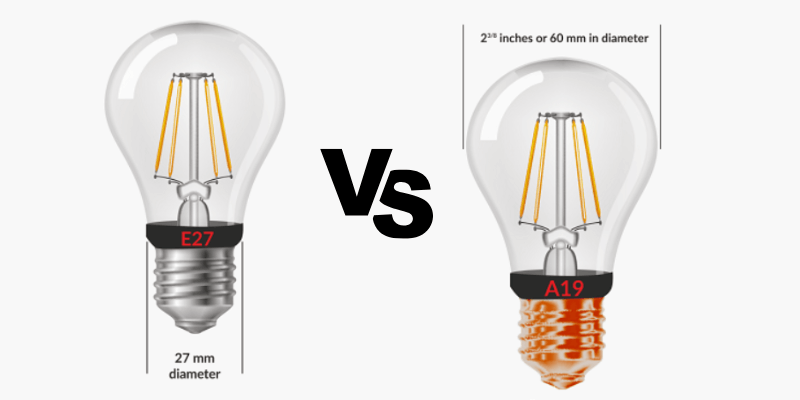
For a clear example of different types of light bulbs sizes, consider a standard A19 bulb. Take the number 19 and divide it by 8. This tells you the bulb is exactly 2.375 inches wide at its widest point.
- Type A (Arbitrary): The classic teardrop design. A type A lamp bulb is the undisputed standard for table lamps and bedside nightstands across the United States.
- Type B and C (Candelabra): Shaped like a candle flame or torpedo. These elegant candelabra bulbs are common in chandeliers and entryway sconces.
- Type BR (Bulged Reflector): Features a wide, reflective face that directs light downward. The BR30 bulb is the standard choice for recessed ceiling cans in American kitchens.
- Type T (Tubular): A slender, cylindrical shape. Tubular bulbs like the T19 are widely used in vertical sconces, exposed lantern fixtures, and decorative accent lamps.
Light Bulb Base Types and Fittings: How to Ensure a Perfect Fit
Buying the correct bulb shape is useless if the base cannot connect to your electrical socket. Standard residential voltage in the United States is 120V. Understanding the types of light bulbs fittings ensures you buy the right bulb on the first try.
Edison Screw Bases (E Series)
Screw bases are the most popular fitting in American households. You simply twist the threaded base clockwise into the socket.
- E26 Medium Base: The number 26 stands for 26 millimeters. The E26 standard base is the universal fitting found in standard table lamps, floor lamps, and outdoor porch lanterns.
- E12 Candelabra Base: Measuring 12 millimeters across, this smaller screw base is common in dining chandeliers and nightlights. It is also one of the most common different types of light bulbs for ceiling fans.
- E17 Intermediate Base: A less common base measuring 17 millimeters, frequently used in microwave hoods, older ceiling fans, and specialty appliances.
- E39 Mogul Base: A heavy duty screw base measuring 39 millimeters, built for high wattage commercial fixtures and large outdoor post lamps.
Pin Bases and Two Prong Fittings
Not all light fixtures use threaded screw sockets. Some fixtures use push in or twist lock pins to save space or lock the bulb securely in place.
Homeowners frequently search for types of light bulbs with 2 prongs when replacing track lighting or bathroom ceiling fixtures:
- GU10 Base: This fitting features two thick, blunt pins spaced 10 millimeters apart. You push the bulb into the socket and twist it clockwise a quarter turn to lock it. It is the premier base for directional spotlights.
- GU24 Base: Another popular two prong fitting designed with two wide pins. Many newer residential building codes, such as California Title 24, require GU24 sockets to prevent users from inserting inefficient incandescent bulbs.
- Bi Pin Bases (G4 and G9): These feature two thin straight pins or looped loops that push straight into the socket without twisting. They are common in under cabinet puck lights and modern designer chandeliers.
Bayonet Bases (B Series)
Bayonet bases feature a smooth metal cylinder with two small locking pins protruding from opposite sides. You push the bulb down into the socket and twist it slightly to catch the pins.
While bayonet fittings like the B22 are very common in the United Kingdom, they are rarer in standard US residential wiring. In the United States, you will primarily encounter bayonet bases in vintage fixtures, automotive lights, and recreational vehicles.
For a helpful practical example, imagine trying to install a small E12 chandelier bulb into a standard E26 living room lamp. The bulb will simply rattle and fall out of the socket. Always read the stamped safety label inside your socket before ordering replacements.
Different Types of Light Bulb Colors, Brightness, and RGB
Finding the right bulb involves more than matching physical dimensions. Understanding light color transforms your home from feeling sterile into feeling warm and inviting.
Color Temperature on the Kelvin Scale
Light color temperature is measured in Kelvins. Lower numbers produce a warm amber glow, while higher numbers produce a crisp blue white light.
- Warm White (2700K to 3000K): Emits a cozy golden glow identical to traditional incandescent filaments. This is the top choice for living rooms and bedrooms.
- Cool White (3500K to 4100K): A clean neutral tone without amber or blue tints. It provides crisp visibility for kitchen countertops and home study areas.
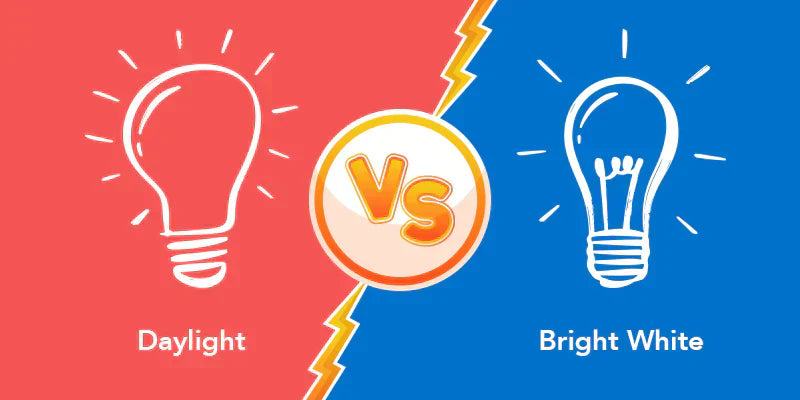
- Daylight (5000K to 6500K): A vibrant, cool white light that mimics natural midday sunlight. It works best in garages, laundry rooms, and home workshops.
The Power of RGB and RGBTW Lighting
Modern lighting has advanced far beyond ordinary white illumination. Smart bulbs equipped with RGB and RGBTW technology offer sixteen million colors alongside the full spectrum of tunable whites.

Here is a practical example of how RGB transforms daily life. On an ordinary weekday evening, you can set your lamp to a soothing 2700K warm white for reading.
When weekend hosting begins, you can instantly turn the lights to team colors for game day or select vivid orange and purple themes for Halloween. With app control, you can even sync the shifting colors to your favorite music playlist.
Which Bulb is Brighter: Warm White vs Daylight?
A very common myth among homeowners is that daylight bulbs are naturally brighter than warm white bulbs. This assumption is completely false.
When evaluating different types of light bulbs brightness, color temperature does not measure light output. Brightness is measured exclusively in Lumens.
A 1100 lumen warm white bulb emits the exact same quantity of light as an 1100 lumen daylight bulb.

Daylight can appear brighter to the naked human eye because our retinas are naturally more sensitive to cool blue wavelengths. However, the actual optical power remains identical.
For reference, an 800 lumen bulb matches a traditional 60 watt incandescent, while an 1100 lumen bulb delivers the intense brightness of a 75 watt to 100 watt replacement.
Best Types of Light Bulbs for Home: Room by Room Guide
Upgrading to smart lighting gives you personalized control over schedules, colors, and energy consumption. Here are the top smart bulbs currently available from Linkind to enhance every room in your home.
Living Room and Bedroom Ambient Lighting
Your main living quarters require lighting that adapts to whatever you are doing. You need clean, bright light for organizing during the afternoon and relaxed, dim lighting for winding down at night.
The Linkind Matter Smart A19 RGBTW bulb is the ultimate upgrade for your standard table and floor lamps. Delivering up to 1100 lumens of brightness, it easily illuminates large family rooms.
Because it runs on the Matter protocol, you can pair it directly with Apple Home, Amazon Alexa, or Google Assistant by scanning a single QR code on the box.
Kitchen and Basement Recessed Lighting
Recessed ceiling cans are a staple of American kitchens, finished basements, and open hallways. Regular A19 bulbs are too narrow for these cans, causing light to get trapped inside the housing.
The Linkind Matter BR30 smart bulb features a wide, flared reflector face that casts wide beams of light downward onto your kitchen islands and countertops.
You can use simple voice commands to dim the kitchen lights while your hands are covered in flour during dinner preparation.
Entryway, Porch, and Atmospheric Accent Lighting
For front porches, covered entryways, or decorative living room corner lamps, an ordinary round bulb looks plain. You want unique lighting that creates an unforgettable ambiance for guests and holiday celebrations.
The Linkind T19 Smart Flame Light Bulb is specifically engineered for this role. With its distinctive T19 tubular shape and standard E26 base, it fits standard indoor lamps and outdoor enclosed fixtures.
It delivers 850 lumens of brightness and features realistic dynamic flickering flame effects, fifty customizable lighting zones, and over one hundred preset holiday scenes.
You can set an inviting fireside glow for a quiet evening or turn on dynamic color chasing effects for festive porch decor.
Dining Room and Exposed Glass Fixtures
If your dining room features a modern farmhouse chandelier or clear glass pendant lights, a standard frosted bulb looks out of place. Exposed glass fixtures require bulbs that look stunning whether they are switched on or off.
The Linkind Matter ST19 Smart Edison bulb provides the ideal solution. It combines the nostalgic beauty of antique exposed filaments with modern tunable white technology and app dimming.
You get the vintage charm of an Edison bulb without the high power bills and heat of old incandescent elements.
Final Thoughts
Selecting the ideal bulb for your home comes down to three primary factors: selecting the correct shape, choosing the right base fitting, and deciding on your desired lumen brightness.
Making the switch from old, energy wasting bulbs to Linkind smart bulbs provides instant benefits for your entire household. With these smart lighting solutions, you can automate your daily schedules, set dynamic RGB color scenes for family holidays, and enjoy significant long term savings on your monthly electric bill.
FAQs
1. What is the difference between an A19 and an E26 bulb?
A19 refers to the physical shape and dimensions of the bulb glass, which is teardrop shaped and 2.375 inches wide. E26 refers specifically to the 26 millimeter screw base. A standard household A19 bulb almost always uses an E26 base.
2. Can I use a smart LED bulb in an older lamp?
Yes. As long as the base fitting matches, a smart LED bulb works in any conventional lamp socket. You simply leave the lamp power switch turned on and manage dimming and scheduling through your smartphone app or smart speaker.
3. Do higher Kelvins mean a light bulb produces more light?
No. Kelvins measure the warmth or coolness of the light color. Lumens are the only measurement that dictates brightness. A higher Kelvin bulb looks bluer, but you must check the lumen rating to determine brightness.




0 comments