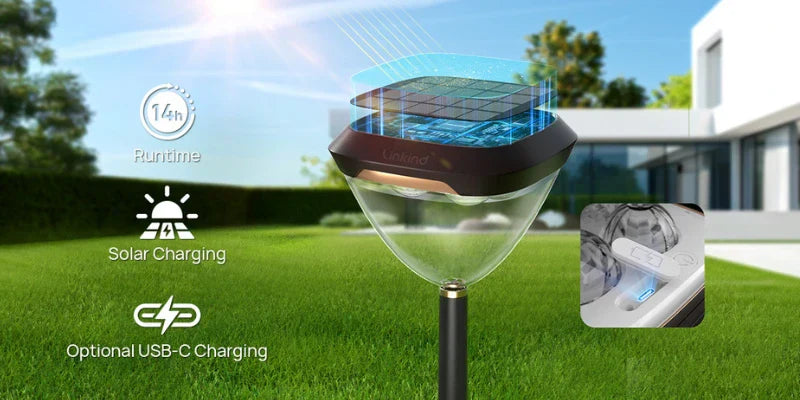
If your outdoor landscape is suddenly looking a little dim during your evening backyard BBQs, the problem likely isn't a dead battery. The real culprit is dirty solar panels. Over time, dust, mud, and hard water stains block the sun's rays, significantly reducing your light's charging capacity. This often leaves your front porch or driveway completely dark by 9 PM, which might even trigger a warning letter from a strict Homeowner Association (HOA).

Knowing exactly how to clean solar panels on garden lights can extend the lifespan of your fixtures by years. In this comprehensive guide, we will walk you through the best methods to wash away grime, remove cloudy oxidation, and upgrade your yard's illumination.
Best Ways to Clean Solar Panels
Routine maintenance prevents dirt buildup from permanently baking into the solar cell under the hot summer sun. Here are the safest daily cleaning methods.
Can I use Dawn dish soap to clean my solar panels?
Yes, using a mild dish soap like Dawn mixed with warm water is the safest and most effective way to clean everyday dirt off your solar panels.
Follow these simple steps for basic maintenance:
- Prepare the mix: Add a few drops of dish soap into a small bucket of warm water.
- Dampen a cloth: Dip a clean microfiber cloth into the solution and wring it out so it is not dripping.
- Wipe gently: Clean the surface lightly. Never use rough scouring pads, as they will permanently scratch the photovoltaic surface.
How to clean solar lights with vinegar
To clean hard water stains or mineral buildup off your solar lights, mix one part distilled white vinegar with two parts water.
In many American suburbs, lawn sprinklers spray mineral-heavy tap water directly onto garden lights. This creates a stubborn, crusty white film.
Knowing how to clean solar lights with vinegar solves this safely. Here is how to do it:
- Spray your DIY vinegar solution directly onto a microfiber cloth.
- Let the damp cloth sit on the crusty panel for a minute to dissolve the calcium.
- Gently wipe the mineral residue away.
How to Clean Cloudy Solar Panels
If you live in a state with intense UV exposure, like Florida or Texas, the plastic coating on standard solar panels can become heavily oxidized and turn a milky, cloudy white.
Cleaning solar lights with toothpaste
Using a non-gel toothpaste works exceptionally well for removing minor oxidation. Toothpaste contains mild abrasives that gently buff away the cloudy layer.
When cleaning solar lights with toothpaste, follow this process:
- Apply a small dab of white paste directly to the oxidized panel.
- Rub the paste in small, circular motions with a damp cloth for two minutes.
- Wipe away the leftover residue with a clean, wet towel.
You will immediately notice the panel looks clearer, allowing sunlight to reach the internal cells once again.
How to clean solar lights with baking soda
If you prefer a natural alternative, a baking soda paste provides the exact same gentle abrasive action needed to polish oxidized panels.
To execute how to clean solar lights with baking soda, use this recipe:
- Mix three parts baking soda with one part water to form a thick paste.
- Spread the paste over the cloudy panel and let it sit for five minutes.
- Gently scrub with a damp sponge, then rinse the panel completely.
Do WD-40 or Windex Clean Solar Lights?
DIY communities and forums are full of "hacks" for restoring outdoor hardware, but you must be careful about what chemicals you apply to outdoor electronics.
Does WD-40 clean solar lights?
No, WD-40 does not actually clean solar lights; it is only a temporary cosmetic fix.
Many homeowners ask, will wd-40 clean solar lights? While spraying WD-40 on a cloudy solar panel instantly makes it look shiny and clear, this oil-based lubricant leaves a sticky residue behind. Within a few days, that residue will attract massive amounts of dirt and pollen, blocking out the sun even worse than before. Furthermore, petroleum distillates can degrade the rubber weather seals protecting the internal 1.2V batteries, leading to water damage during heavy rainstorms.
How to clean solar lights with Windex
You can use Windex to clean the glass or plastic housing of the light fixture, but you should avoid spraying Windex directly onto the top solar panel itself.
If you are researching how to clean solar lights with windex, keep in mind that the harsh ammonia found in heavy-duty glass cleaners can slowly strip away the UV-protective clear coat on the top of the solar cell. Stick to mild soap for the panel, and reserve Windex strictly for the transparent lens where the LED bulb shines through.
Cleaning Solar Lights With Sensors
Modern smart lighting relies on sensitive hardware. If you want to know how to clean outdoor solar lights with sensor technology, use extreme caution.
Smart fixtures feature built-in dusk-to-dawn sensors. If you aggressively scrub these small lenses, you will scratch them.
A scratched sensor will cause the light to malfunction by staying on all day or failing to turn on at night.
Always use a dry or slightly damp, ultra-soft cloth to gently dust them.
How to Revive or Replace Solar Lights
Eventually, the extreme summer heat and freezing winter temperatures will cause older solar panels to completely fail. Here is how to handle panels that are beyond a simple scrub.
How do you restore solar panels on garden lights?
To completely restore severely weathered solar panels, you must wet-sand the oxidized plastic layer and apply a fresh coat of UV-resistant clear acrylic polyurethane spray.
This process essentially replaces the factory clear coat. However, if your fixtures have been sitting in the yard for over three years and barely hold a charge, how to revive solar lights often comes down to internal hardware failure rather than just dirty exterior panels.
How to replace solar panels on garden lights
You cannot easily replace integrated solar panels on basic garden lights. Upgrading to a new smart fixture is the most cost-effective and reliable solution.
If you are researching how to replace solar panels on garden lights because old fixtures die early, upgrading will transform your yard.
Here are the top three high-performance replacements engineered to overcome cloudiness and weak charging:
1. Linkind SL5C Smart Solar Spotlight
The ultimate heavy-duty landscape spotlight built to withstand extreme sun and weather.

- SolarDot™ Power Tech: Built-in MPPT algorithms harvest energy down to 500 lux, charging reliably on overcast winter days.
- Monocrystalline Glass Panel: Resists cloudy UV oxidation and sun-baking far better than cheap plastic.
- LumiSync™ Audio Sync: Pulses vibrant colors in real time to the beat of outdoor music during backyard BBQs.
- 14-Hour Runtime: Delivers dependable dusk-to-dawn lighting to keep your driveway bright all night.
- IP67 Waterproofing: Heavy-duty sealed housing protects against heavy rain, snow, and lawn sprinklers.
- Smart App Control: Easily program schedules and select from 16 million colors using the AiDot app.
2. Linkind SP6 Smart Solar Pathway Lights
Say goodbye to dim, yellowing path stakes with a dramatic boost to your home's nighttime curb appeal.

- SolarDot™ Energy Efficiency: Maximizes sunlight conversion to keep pathways brightly illuminated until morning.
- AuraScape™ Optical Lenses: Swappable textured lenses project sharp, kaleidoscope-like patterns across walkways.
- Dual-Power Backup: USB-C fast charging provides a reliable fallback charge during consecutive rainy days.
- LumiSync™ Integration: Coordinates lighting pulses and rhythm changes across your entire garden layout.
- Lawn-Ready Durability: Rugged housing withstands accidental impacts from weed eaters and lawnmowers.
- Bluetooth Mesh Grouping: Seamlessly links up to 32 fixtures together across large suburban yards without outdoor Wi-Fi.
3. Linkind SL6C Smart Solar Spotlight with Dual-Ring Lighting
The most versatile architectural lighting upgrade for shaded trees and house facades.
- AuraScape™ Dual-Ring Optics: Independently control a 32° narrow spot for tall trees and an 82° wide halo for wall washing.
- Detachable Panel Design: Lets you stake the solar panel in full sunlight while mounting the spotlight under shaded eaves or porches.
- SolarDot™ Charging: Delivers high-efficiency low-light harvesting paired with convenient USB-C backup charging.
- Dotis™ AI Scene Assistant: Automatically choreographs custom mood scenes and holiday light shows via smart prompts.
- LumiSync™ Dynamic Lighting: Creates rich, color-flowing visual reactions synced to your ambient music.
- All-Weather Performance: IP66-certified body operates flawlessly in freezing temperatures down to 14°F.
 Shop Linkind SL6C Smart Solar Spotlight →
Comparison of Cleaning Methods
To help you choose the right approach for your yard, review this quick comparison of common cleaning agents:
| Cleaning Method | Best Used For | Risk Level to Solar Panel | Expected Result |
|---|---|---|---|
| Dawn Dish Soap | Everyday dirt, mud, and bird droppings. | Very Low | Clean, clear panels for daily maintenance. |
| White Vinegar | Hard water stains and calcium buildup. | Low | Dissolves mineral crust without scratching. |
| Toothpaste / Baking Soda | Cloudy, heavily UV-oxidized plastic panels. | Medium | Gently polishes away the top layer of dead plastic. |
| WD-40 | Temporary shine (Not Recommended). | High | Leaves sticky residue and destroys rubber weather seals. |
Takeaway: Always start with warm water and Dawn dish soap. Only graduate to mild abrasives like toothpaste if the plastic panel has turned visibly white and cloudy from sun damage.
Final Thoughts
Keeping your fixtures bright doesn't have to be a chore. Always start with mild soap, and never use harsh chemicals. If your panels require weekly scrubbing just to provide dim light, the internal batteries are exhausted. Upgrading to high-efficiency Linkind solar light fixtures is the ultimate way to keep your property beautifully illuminated.
FAQs
1. What is the best thing to clean solar lights with?
Warm water mixed with a few drops of mild dish soap (like Dawn) applied with a microfiber cloth is the safest and most effective daily cleaner.
2. Can I use a pressure washer to clean my outdoor solar lights?
Absolutely not. The extreme force of a pressure washer will destroy the waterproof seals on your fixtures, forcing water inside the housing and permanently short-circuiting the battery and LED board.
3. Why do my solar lights only stay on for a few hours even after cleaning?
f your panels are perfectly clean but die quickly, the internal batteries have likely reached the end of their lifespan. Most batteries need replacing every 12 to 18 months, or you should upgrade to modern smart lights with lithium-ion batteries.